ARTEMIS II • PHOTOGRAPHY • ENGINEERING CHOICES
A 2016 Camera Model Goes Around the Moon
The Nikon D5 aboard Artemis II connects everyday imaging technology with deep-space exploration.
ADDED OCTOBER 29, 2026 • FLIGHT IMAGERY FROM APRIL 2026
What the primary records confirm
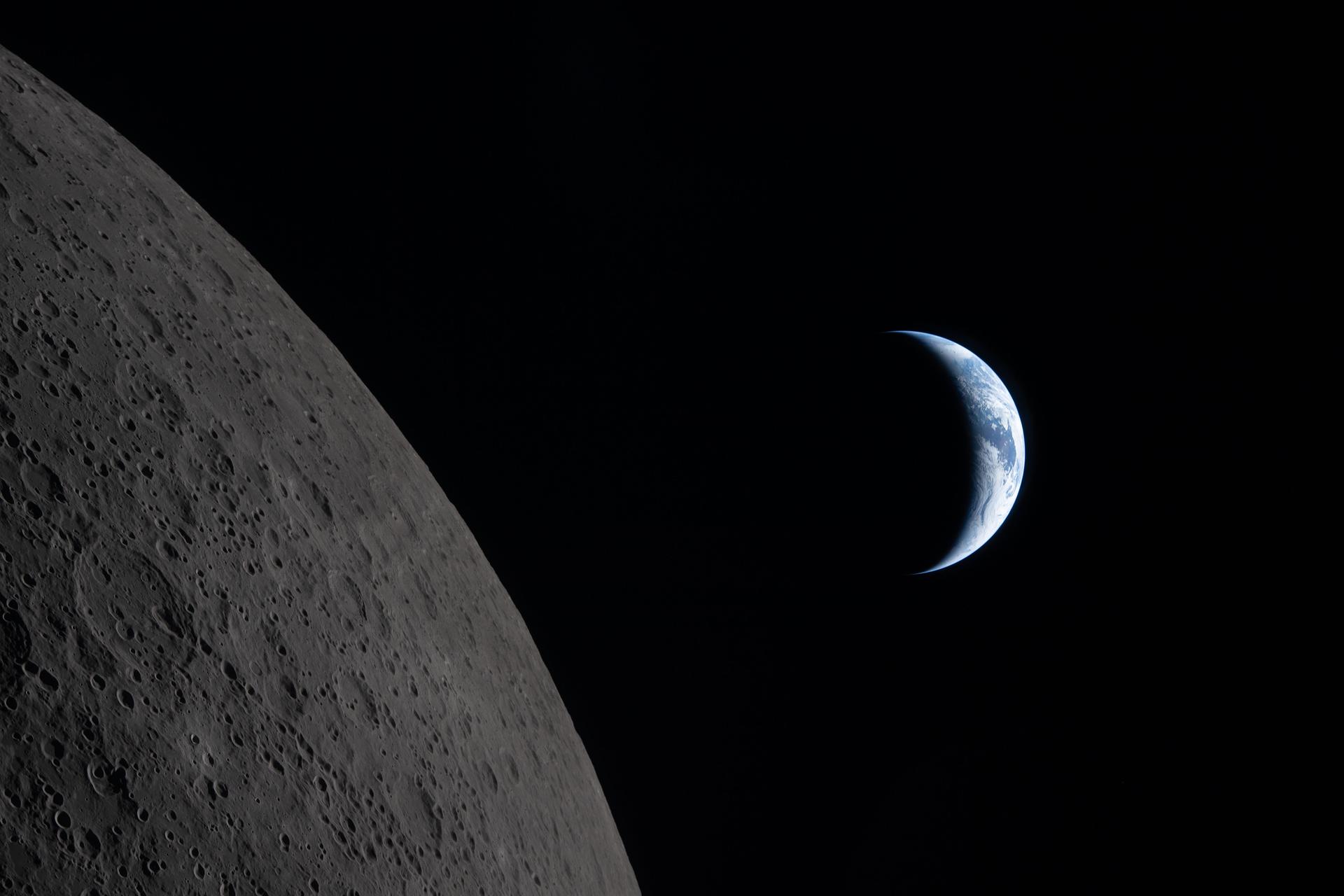
NASA’s Planetary Data System lists both Nikon D5 and Nikon Z9 handheld cameras in the Artemis II archive. The flight launched April 1, 2026, passed the lunar farside on April 6 and returned in April. The archive includes crew imagery and supporting mission documentation.
Nikon announced the D5 in January 2016. In 2017, NASA ordered 53 standard D5 bodies for astronaut training and International Space Station activities, without special hardware modifications. That earlier order documents the model’s NASA history; it does not specify every Artemis II flight configuration.
Low light: a real capability, a careful comparison
Nikon’s launch specifications give the D5 a standard sensitivity range reaching ISO 102,400, with higher expanded settings. Those specifications document a low-light-oriented design; they do not by themselves establish a ranking against every flight-approved camera.
The shared headline calls it the most light-sensitive camera approved for the flight. The primary archive confirms its use, but the sources linked here do not provide a complete flight-qualification comparison supporting that superlative.
What “from 2016” means
The year identifies the camera model’s introduction. It does not establish when a particular flight camera was manufactured, purchased or serviced.
The engineering lesson
MKP interpretation: A useful equipment decision starts with the job: lighting, handling, reliability, data storage, crew familiarity and the evidence available from testing. A newer release date is only one piece of that decision.
Flight heritage is useful evidence, while a different mission environment still deserves its own evaluation. An earlier successful deployment does not automatically answer every question about later use.
A classroom question worth asking
If you were selecting a camera for a mission, what evidence would matter more than its age? Design a comparison that includes image quality, reliability and ease of use. What extra documentation would you need before claiming one option was “best”?
Primary sources
- NASA PDS Geosciences Node: Artemis II mission and camera archive.
- Nikon: D5 announcement and specifications, January 6, 2016.
- Nikon: NASA orders 53 unmodified D5 cameras, August 25, 2017.
- NASA: The Edge of Two Worlds, image and caption.