SPACE HISTORY • VENUS • EXTREME ENGINEERING
Venera 13: 127 Minutes on Venus
A short mission by Earth standards became an extraordinary achievement on another world.
ADDED OCTOBER 27, 2026 • HISTORICAL MISSION
The headline checks out—with one detail
The Soviet Venera 13 lander reached Venus on March 1, 1982, and transmitted from the surface for 127 minutes: two hours and seven minutes. Its planned surface lifetime was 32 minutes, so “about 30 minutes” is a reasonable headline rounding. It operated for almost four times that planned duration.
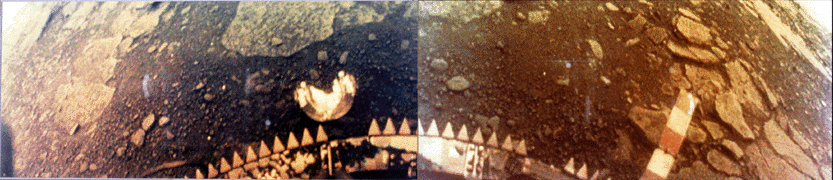
What came back?
The camera recorded surface panoramas showing flat rocks and soil. NASA’s image archive notes that the atmosphere filters blue light, complicating judgments about true surface colors. A drill collected material for onboard X-ray fluorescence analysis, adding chemistry to the visual record.
Survival in a hostile environment
The lander housed its electronics and instruments within a sealed pressure vessel. The mission summary reports approximately 457°C and 84 Earth atmospheres at its landing site. It relayed measurements through its flyby carrier, combining surface operations with a communications link overhead.
What MKP takes from it
Engineering interpretation: A mission’s value depends on what it can measure and transmit within its operating window. Designing a protected interior, prioritizing observations and providing a reliable relay can turn a brief visit into lasting knowledge. These principles offer useful questions for extreme-environment robotics on Earth and beyond.
Exceeding a design target does not make the environment easy or establish a blueprint for permanent habitation. Long-lived operations require a different level of thermal control, component endurance and system testing.
Classroom and discussion prompts
If you had only 32 minutes, which three measurements would you send first? What would you do with the additional 95 minutes? Which systems would need redesigning for a mission lasting a day, a month or a year?
Discuss extreme-environment engineering →Sources
- NASA/NSSDC: Venera 13 surface panorama and mission context.
- Russian Planetary Lander Missions, hosted by the Lunar and Planetary Institute/VEXAG; Venera 13 mission summary, PDF pages 24–27.
- NASA: Deep Space Chronicle, mission chronology confirming the 32-minute plan and 127-minute transmission.